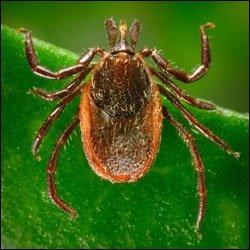
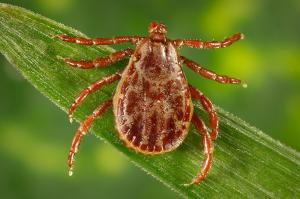
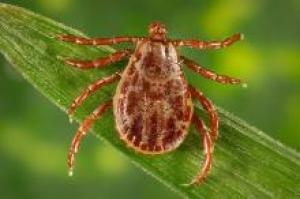
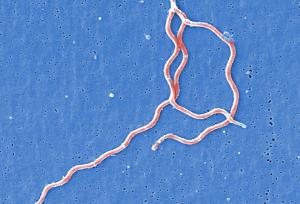
Blacklegged tick (Ixodes scapularis)

Blacklegged tick

Although not the most ubiquitous tick species in this country, the blacklegged tick is easily the best known of all Canada's ticks thanks to its role as the primary vector of Lyme disease in Canada east of the Rocky Mountains.

Blacklegged ticks are three-host generalist feeders, meaning that over the course of their journey from egg to larvae to nymph to adult, these ticks must dine on three host vertebrates in order to acquire the blood they need to fuel their transition from one stage to the next.

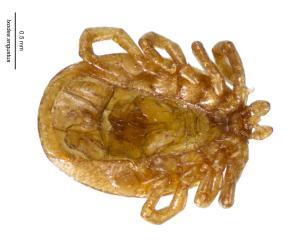
Groundhog tick (Ixodes cookei)

Groundhog tick

Groundhog ticks are widespread throughout much of southern Ontario and Quebec as well as in other southerly locations in eastern Canada where they make their homes in the dens of their hosts as far west as Manitoba. They look remarkably like blacklegged ticks in terms of size and other physical characteristics, so much so that the average person has difficulty telling them apart. One hint that you may be looking at a groundhog tick and not a blacklegged tick is that peak activity for adult groundhog ticks is in mid-summer while adult blacklegged ticks are most active in spring and fall.

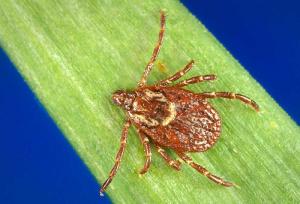
American dog tick (Dermacentor variabilis)

American dog tick

Today I'm going to introduce you to a domestic tick that you've probably already encountered even if you didn't know its identity.

American dog ticks are large, reddish-to-greyish brown ticks that are fairly easy to spot. As their common name suggests, dogs are an important host for adult American dog ticks although this tick species is neither restricted to the US nor does it rely solely on dogs for the blood it needs to propel its lifecycle.

NEW SERIES: Know your ticks

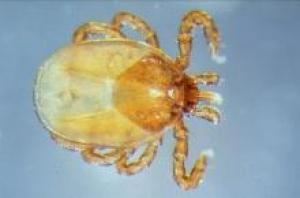
Rocky Mountain Wood Tick

Of the roughly 40 tick species known to make their home in Canada, there are nine that are capable of transmitting bacteria, viruses, and/or protozoa to humans and domestic animals. Non-infectious secretions from the salivary glands of some species can also cause paralysis, allergic reactions and/or immune system suppression.

The Lyme-climate connection

An acorn lying on the ground

Climate change is a huge topic for Canadians to wrap their brains around and, frankly, most of us don’t have time to delve into the specifics. If you ask the average Canadian what the impact of climate change will be on their lives, most have no trouble stating that it will cause temperatures to rise, glaciers to melt, and forests to be reduced to ash. 

Pages